Cold runs SEO for online shops where the catalogue is the hard part. Thousands of products, variants that each want their own URL, filters generating pages nobody intended, and a category structure that made sense when there were sixty lines and does not now. We sort the structure, then make the pages that sell earn their rankings.
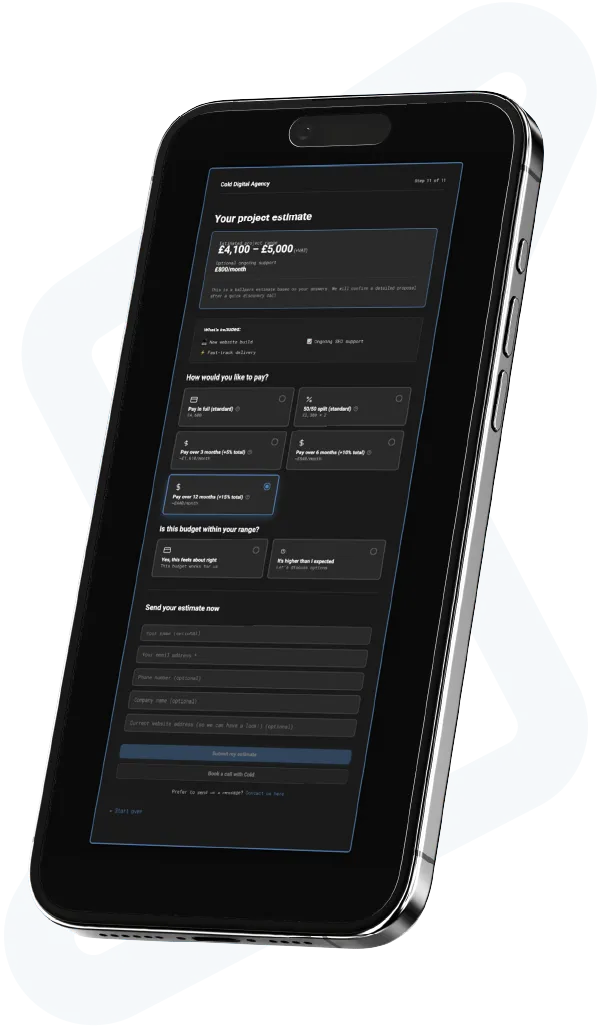
This is an instant, live ballpark quote calculator. You’ll see a project range and flexible payment options, including pay over time and monthly retainer costs.
Step 1 of 2Enter your website (or the one you’d like) to start:












Ecommerce SEO goes wrong at scale. A faceted navigation left open can create tens of thousands of crawlable URLs out of forty products, and Google spends its time on those instead of your categories. Product descriptions come straight from the manufacturer feed, identical to every other retailer selling the same thing. Discontinued lines leave dead pages or get redirected to the homepage in bulk. And the marketplaces and the brands themselves hold the top of the results for the terms you want most.
We start with the catalogue and the crawl, because the structure sets the ceiling. Which categories exist, which should, what the filters are allowed to generate, and what happens to a product when it sells out for good. Then the pages: category pages written to rank for the way people search, product pages with something on them the feed did not supply. Reporting is tied to revenue, not sessions.
Category pages that bring in buyers at the point of comparison, which is where the margin is. A crawl budget spent on pages that sell rather than on filter combinations. Fewer dead ends when stock changes. The number we report on is revenue from organic search by category, so you can see which parts of the range search is feeding and buy stock accordingly.
made by












Shoppers search by category, by attribute and by brand, and each of those needs a different page type. We map your range against how people really search, which usually reveals categories you do not have and a dozen you should merge. Attribute searches like a size, colour or material are where most stores leave money, because the filter page that would answer them is blocked from being indexed.
Category pages are the commercial engine and most are a grid with a sentence above it. We write them to answer what a shopper compares on: the differences between options, what to buy for which job, sizing, delivery and returns. Product pages get something the manufacturer feed cannot give them, starting with your best sellers rather than all nine thousand lines at once.
This is where the big wins usually sit. Faceted navigation controlled so filters create value instead of forty thousand URLs, canonicals on variants, pagination handled properly, Product and Offer schema with live price and stock, and a plan for discontinued lines that keeps the link equity rather than dumping it on the homepage. We also check speed on a real phone, because a slow category page loses shoppers before it can rank for anything.
If you also sell from premises, the shop and the store need to work together. A Google Business Profile per branch, local inventory where your platform supports it, and click and collect signposted on the pages people land on. For stores with no physical presence, this effort moves to the marketplace and comparison feeds that behave like local listings for your category.
Retail links come from being worth writing about. Buying guides and comparison content that reviewers cite, original data on what is selling, the brands you stock linking to you as a stockist, and the trade and hobby press in your category. Supplier and brand pages are the overlooked one: plenty of manufacturers maintain a dealer list and will add you for the asking.
The report leads with organic revenue by category, then conversion rate, average order value and the searches behind them. Rankings and traffic sit underneath, because a category that ranks and does not sell is a problem rather than a result. We flag the categories where search demand exists and you have nothing to sell against it, which is usually a buying decision rather than a marketing one.
Weeks one and two are the catalogue and the crawl. We map your categories against real search demand, find what the filters are generating, and come back with the structural decisions that need making before anything gets written.
From week three we fix the technical faults, set the faceted rules, then rewrite the categories that carry the most revenue. Product page work starts with best sellers and works down rather than trying to cover the whole range.
From month two the pages are live and we push into attribute and brand searches. You get a monthly report on organic revenue by category from the person doing the work, and stock and seasonality steer what we do next.
Online shoppers rarely arrive at the product they buy. They search a category or an attribute, land on a listing page, filter it, compare three options and then buy one. That means the category page does the selling and the product page closes it, which is the reverse of how most stores invest. Shoppers also check delivery cost, returns policy and whether anyone has reviewed the thing before they commit, and they will leave a faster site to find all three. Stores that put that information where the comparison happens convert better than stores with a bigger range.

Forty second answers with no jargon. Anything else, ring the office and ask whoever picks up.
Technical fixes on a large catalogue can release traffic within weeks, because you are usually unblocking pages Google already wanted. Category rewrites take two to three months to settle. A full programme on a competitive range needs six to twelve months to be worth judging. We start with whichever categories carry the most revenue so there is something measurable before the quarter is out.
Some of them, deliberately, and the rest never. A filter that matches a real search, like a size, a material or a brand within a category, deserves an indexable page with its own heading and copy. Every other combination should be blocked or canonicalised, because the alternative is tens of thousands of URLs eating the crawl budget your categories need. Getting that boundary right is often the single biggest win on a large store.
No, and attempting it on nine thousand lines is how programmes stall. Prioritise: your best sellers and highest-margin lines get real copy, the rest get a structured description built from your own attributes and reviews rather than the manufacturer's paragraph. The bigger return is almost always at category level, where one page can serve hundreds of products and the shopper is still comparing.
Retainers start from £1,000 a month. Catalogue size is the main driver, along with the platform and how much of the technical groundwork is already in place. A 300-product Shopify store is a very different job from a 40,000-line WooCommerce site with eight years of discontinued stock behind it. You will see the figure before you commit to anything.
It depends on whether the product is coming back. Temporarily out of stock pages stay live and say so. Permanently discontinued lines get redirected to the nearest equivalent product or the parent category, chosen per product rather than in bulk, because redirecting everything to the homepage throws away the links and rankings those pages earned. Pages with real traffic sometimes keep their place and point visitors at the replacement.
Not usually on a plain product name, and that is the wrong target anyway. Where independent retailers win is on category, attribute and use-case searches, the comparison questions the marketplaces answer badly, and on specialist ranges the big players carry thinly. We will tell you after the research which parts of your range are winnable and which are not worth the budget.
We build and run the kind of store this work applies to. Prova Racing was an ecommerce design and development job with user accounts, member pages and automation behind it. Dissident Automotive designs and manufactures carbon fibre components for the motorsport trade, where the brand and the site were one project. The people who understand your platform are in the same room as the people doing the SEO.
If the store itself is the limit, our ecommerce web design covers the rebuild, and the wider SEO service handles the programme around it.


Smart design decisions, great communication, and fast turnarounds, even over the Christmas break. Everything was scoped clearly, delivered on time, and they went above and beyond with extra refinements.
They delivered a professional, high-quality website and continue to provide excellent ongoing SEO support. Communication is clear, results-driven, and they genuinely understand our business objectives.
I couldn’t be happier with the outcome and highly recommend their team. I would absolutely work with them again (and likely sooner than they expect!).
They delivered far beyond what I was expecting, and I’m honestly over the moon with my new website.
The final product met all our expectations and clearly reflected their creativity, attention to detail, and dedication to delivering quality work.
We were most impressed with Cold | Digital Agency's creativity.
We're impressed with their enthusiasm for success.
They brought our identity to life in a way that felt authentic and future-focused.
Our SEO and Google rankings have improved significantly, and we’ve had a big increase in quality leads coming through the website.
They’re extremely attentive, they listened to what I wanted and brought it to life amazingly.
Superb service for my business and such a professional team.
Excellent service and really delivered on the brief I gave them. Designed the logo and my website, very happy with the result and would highly recommend.
Their whole purpose was to listen to me and deliver.
They provided professional and personalized services to suit my needs.
They consistently delivered all items on time and kept me informed throughout the process.
Overall, we were pleased with the service provided.
Cold | Digital Agency couldn't cater to my needs anymore if they tried.
I have been nothing but greatly satisfied with the work he has done for me, everything has been carefully considered and tailored to me!
They had it built much faster than I was expecting with lots of amazing features, couldn't have asked for a better site and I was very surprised at the great price for the quality they provided.
| SEO Shopify stores | SEO WooCommerce stores | SEO Webflow Ecommerce |
| SEO Category page strategy | SEO Faceted navigation | SEO Product feeds and schema |
| SEO Large catalogues | SEO Platform migrations | SEO Marketplace and brand |
This is an instant, live ballpark quote, not a final proposal. It can cover branding, websites and marketing. You will see a project range and flexible payment options, including pay-over-time. Takes about 3 minutes.
Prefer to skip the calculator and ask a quick question? Drop us a line and we'll be in touch.